Joy .. and despair


Oct 13
Christ urges us (cf. 2Cor 5,14) : each one of us has to be not only an apostle, but an apostle of apostles, bringing others along, so that they in turn will encourage others to make Jesus Christ known to everyone.
Perhaps someone will ask how we are to bring this knowledge of Christ to others. And I reply: naturally, simply, living as you live in the middle of the world, devoted to your professional work and to the care of your family… Ordinary life can be holy and full of God.
Our Lord is calling us to sanctify the ordinary tasks of every day, for the perfection of the Christian is to be found precisely there. Let’s consider it… as we contemplate Mary’s life.
We can’t forget that Mary spent nearly every day of her life just like millions of other women who look after their family, bring up their children and take care o£ the house. Mary sanctifies the ordinary everyday things — what some people wrongly regard as unimportant and insignificant: everyday work, looking after those closest to you, visits to friends and relatives.
What a blessed ordinariness, that can be so full of love of God! For that’s what explains Mary’s life — her love. A complete love, so complete that she forgets herself and is happy just to be there where God wants her, fulfilling with care what God wants her to do. That is why even her slightest action is never routine or vain but, rather, full of meaning. Mary, our mother, is for us both an example and a way. We have to try to be like her, in the ordinary circumstances in which God wants us to live.
priest, founder
Homily of 04/05/1957 in Es Cristo que pasa (trans. Christ is passing by, p.141)
The soul is self-governed: and though the devil can suggest, he has not the power to compel against the will. He pictures to you the thought of fornication: if you will, you accept it; if you will not, you reject. For if you were a fornicator by necessity, then for what cause did God prepare hell? If you were a doer of righteousness by nature and not by will, wherefore did God prepare crowns of ineffable glory?
Saint Cyril of Jerusalem (313-350)
Saturday. Confessions between 9am and 10am. A priest in the confessional, waiting. For me.
I didn’t go. Preferring to remain stained.
God wants me to hear Him every time He speaks.
Today I was deaf.
What’s in a date then? A birthday? A Saint’s day?
I’ve got both today, 78 and St. Anthony of Padua.
It’s said that the church bells of Lisbon rang without ringers on the anniversary of his death.
Imagine.
Stand on the brow of the cliff facing the sea and into the cold rain that sweeps ashore from the darkness .. feel it bite into what warmth you have remaining and ask yourself lf if this is what you want for those whom you have shown no mercy, no forgiveness.
Eternal dark. Eternal cold. Eternal loneliness.
What you wish for them will be your own reward.
一开始是这个词

这话与神同在

这个词就是上帝

In the beginning was the Word.

And the Word was with God.

And the Word Was God.
Keep away from every bad man, my son, and from all his kind. Never give way to anger, for anger leads to homicide. Likewise refrain from fanaticism, quarrelling, and hot-temperedness, for these too can breed homicide. Beware of lust, my son, for lust leads to fornication.
Likewise refrain from unclean talk and the roving eye, for these too can breed adultery (…) Have nothing to do with witchcraft, astrology, or magic; do not even consent to be a witness of such practices, for they too can all breed idolatry. Tell no lies, my son, for lying leads to theft.
Likewise do not be over-anxious to be rich or to be admired, for these too can breed thievishness. Do not be a grumbler, my son, for this leads to blasphemy. Likewise do not be too opinionated, and do not harbor thought of wickedness, for these too can breed blasphemy. Learn to be meek, for “the meek are to inherit the earth” (Mt 5:5).
School yourself to forbearance, compassion, guilelessness, calmness, and goodness; and never forget to respect the teaching you have had (cf. Is 66:2). Do not parade your own merits, or allow yourself to behave presumptuously, and do not make a point of associating with persons of eminence, but choose the companionship of honest and humble folk. Accept as good whatever experience comes your way, in the knowledge that nothing can happen without God.
Judaeo-Christian catechesis
Jesus said to him, “What if I want him (John) to remain until I come? What concern is it of yours?
You follow me.”
~~
“I have other sheep that are not of this fold. I must bring them also. They too will listen to my voice, and there shall be one flock and one shepherd.”
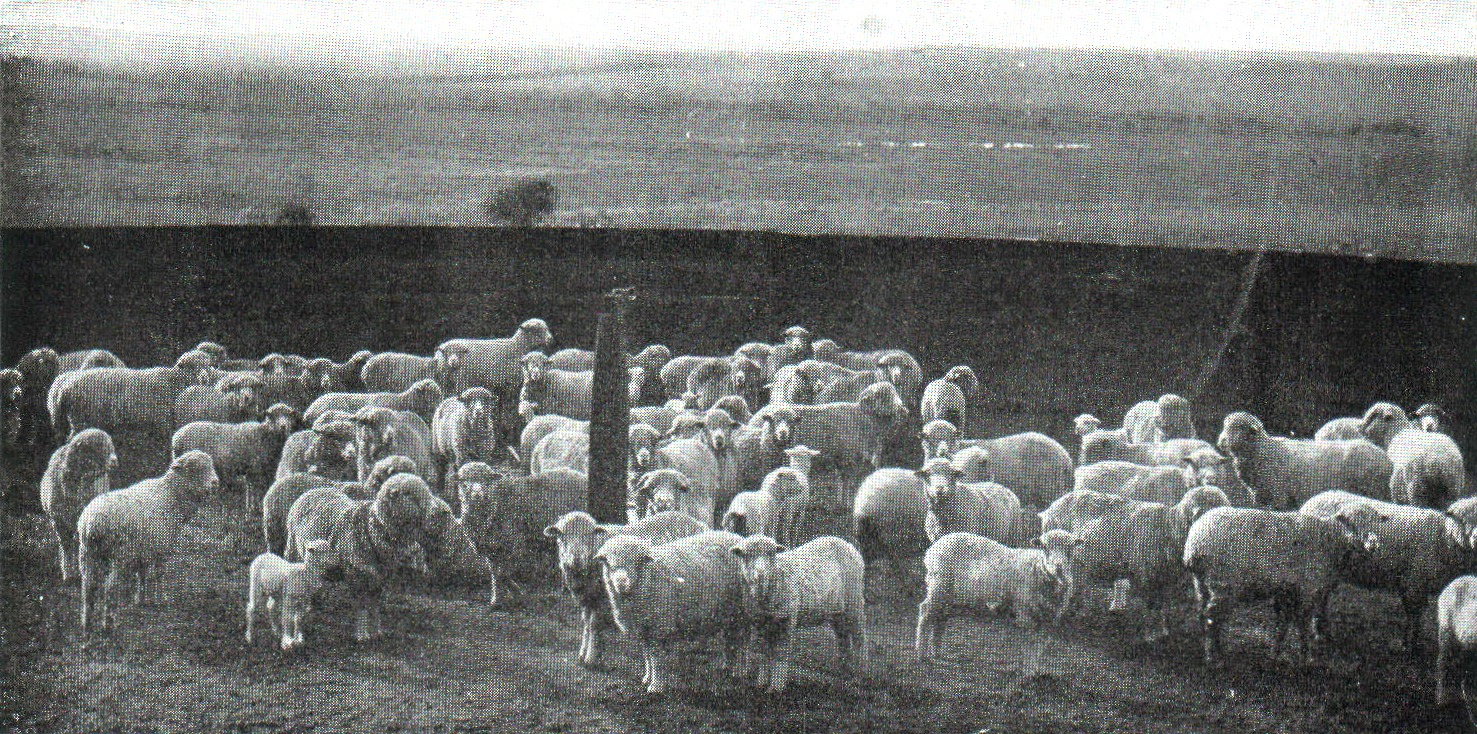
There are also many other things that Jesus did, but if these were to be described individually, I do not think the whole world would contain the books that would be written. John.
God made man a free agent (…) to obey the behests of God voluntarily, and not by God’s compulsion. For there is no coercion with God, but a good will towards us that is present with him continually. In man, as well as in angels, he has placed the power of choice (…) And not merely in works, but also in faith,
Mortal life is full of obstacles to stumble over, covered with the snares of deception (…) And because the enemy had spread out these snares everywhere and caught practically everyone in them, it was necessary that someone stronger should appear to master and break them and thus destroy the path of those who were following them.
For this reason, before coming to unite himself with the Church as his bride, our Savior was also tempted by the devil. (…) In this way he taught the Church that it is not by luxuriousness and pleasure but through many trials and temptations she must come to Christ. Indeed, there was no one else who could have overcome these snares. «For all have sinned», as it is written (Rm 3,23)… Our Lord and Savior, Jesus, is the only one who «committed no sin» (1Pt 2,22).
But the Father «made him to be sin for our sake» (2Cor 5,21) so that «in the likeness of sinful flesh and for the sake of sin, he condemned sin» (Rm 8,3). Thus Jesus walked into these snares but was not himself entangled in them. More, when he had broken and destroyed them, he heartened the Church to the extent that, from now on, she would dare to crush obstacles underfoot, climb over the snares and say, in all happiness:
«Our soul, like a bird, has escaped from the snare of the fowlers. The snare has been broken and we have been saved» (Ps 124[123],7). However, he himself underwent death, yet voluntarily and not, as we do, bound by sin. For he is the only one to have been «free among the dead» (Ps 87,6 LXX). And because he was free among the dead he conquered «the one who had the power of death» (Heb 2,14) and «took prisoners captive» from him (Eph 4,8), those who were held in death.
It was not just that he himself was raised from the dead but, at the same time, he «brought to life those who were captives in death and seated them with him in the heavens» (Eph 2,5f.); «ascending on high, he took prisoners captive» (Eph 4,8).
priest and theologianCommentary on the Song of Songs, III, 27-33 ; SC 376
My dear children and brothers, God, who in his wisdom governs all things, who in an excellent and sensible way leads the seasons and years to a successful end, has also given us to understand this: the salutary days and profitable to one’s soul are already here. (…)
And may thanks be given to the one who has revealed these days to us and judged us worthy of coming to them. This is why we should always lead a holy and pure life and observe all the commandments of God, and particularly now. (…)
So as it is the time for purification, let us purify ourselves! As it is the time for abstinence, let us abstain, and not just from food – that is not enough – but let us abstain (…) from envying the good reputation of our brother, from getting angry or being irritated with our neighbor, not holding back our tongue and letting it run on as it wishes. But let this latter give itself limits so that one does not speak too much or whenever and of suitable subjects.
Let our looking keep itself from shameless looks and our ears be closed, only opening to hear what is pleasing to God and what he loves. Yes, dear children, yes, I exhort you, make of yourselves an instrument, a pleasing harp of the Holy Spirit. (…) Keep peace among yourselves. The most venerable Lent is tiring to the body, it is true, but do not stop, lest your courage wavers from it! (…) A little patience and, as by habit, you will no longer feel its weight!
monk at Constantinople Catechesis 46


 Witness